ONLINE INFIDELITY & BETRAYAL COUNSELLING

Online Infidelity Counselling in India

For the moment when cheating, hidden messages or an emotional affair changes how you see the relationship.

Work with experienced relationship therapists and clinical psychologists to understand what happened, deal with the aftermath and decide what comes next - whether you are married, dating, engaged or in a long-term relationship.

Emotional & Physical Infidelity Micro-Cheating & Digital Betrayal Confidential India & NRIs
5–25+ Years Professional Experience
Clinical Psychology RCI Expertise Across Our Team
Evidence-Based Relationship Therapy Approaches
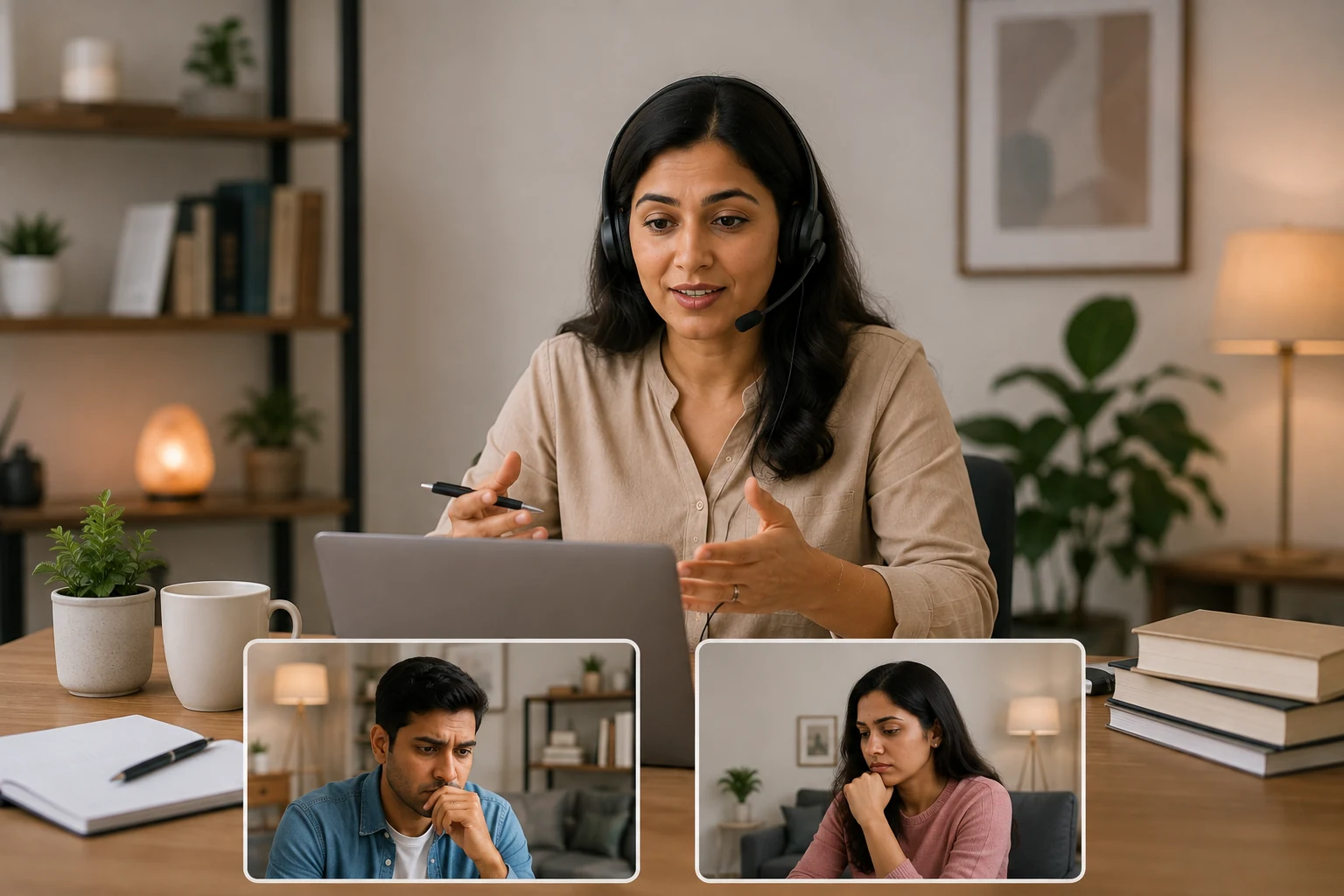
Online infidelity counselling with a relationship therapist
Start together or individually Private online sessions from wherever you are

AFTER INFIDELITY

You May Still Love Them,
but no longer know what to believe.

One part of you may want answers. Another may wish you had never found out. You may want them close, then feel angry the moment they come near.

You may keep wondering whether the relationship you believed you had was real, what else you do not know, and whether trust could ever feel natural again.

And underneath all of that may be one question you cannot answer yet: Do I want to repair this, or am I trying to understand whether I can?

You do not have to decide today. Infidelity counselling can begin with understanding what happened, what it has changed for you, and what you need next.

Emotional impact after discovering infidelity

AFTER BETRAYAL

Do You Feel...

  • Like the relationship you thought you had suddenly wasn’t real
  • Sick with the thought that there may still be more you don’t know
  • Unable to look at your partner the same way anymore
  • Humiliated, rejected or asking yourself, “What was wrong with me?”
  • Unable to sleep, settle your mind or stop replaying what happened
  • Torn between trusting them again and walking away

Betrayal can leave you unsure what to trust — including your own feelings. Counselling can help you understand what comes next.

WHAT WE WORK WITH

What We Work With in Infidelity Counselling

From physical affairs to emotional cheating and hidden online behaviour, counselling focuses on the betrayal itself and what it has changed between you.

Physical & Sexual Infidelity

One-night stands, ongoing affairs, sexual contact outside the relationship or other broken sexual boundaries.

Emotional Cheating & Emotional Affairs

Secret emotional closeness, attachment to someone else or a connection that has crossed agreed relationship boundaries.

Micro-Cheating, Online & Social Media Betrayal

Hidden chats, deleted messages, online flirting, dating apps, secret profiles or concealed contact with an ex.

Lies, Secrecy & Incomplete Disclosure

When information comes out gradually, explanations keep changing or it becomes difficult to know what is true.

Broken Trust, Checking & Fear of Repeat Cheating

Repeated questions, phone checking, reassurance-seeking, suspicion and fear that the betrayal could happen again.

Intimacy, Comparison & Rejection After Cheating

Difficulty with affection or sex, comparing yourself with the other person, feeling unwanted or questioning your attractiveness.

Affair Recovery & What Happens Next

Rebuilding trust, accountability, forgiveness, reconciliation, uncertainty, separation or deciding whether the relationship can continue.

HOW THERAPY WORKS

Therapy Approaches We Use for Infidelity

Infidelity can affect trust, emotions, thinking and the relationship itself. The approach depends on what has happened and what is keeping you stuck.

Gottman-Informed Therapy

For accountability, difficult conversations, boundaries and rebuilding trust through consistent behaviour.

Emotion-Focused Therapy

Works with hurt, anger, fear and the loss of emotional safety after betrayal.

Cognitive Behavioural Therapy

Can help with intrusive thoughts, mental replay, checking and reassurance-seeking cycles.

DBT-Informed Skills

Helps when intense anger, emotional flooding or impulsive reactions make conversations difficult.

Trauma-Informed Therapy

Takes into account shock, triggers, hypervigilance and strong emotional reactions after discovering betrayal.

Relationship & Family Systems Work

Explores wider relationship, family and life patterns without shifting responsibility for the decision to cheat.

No single therapy method is used for every relationship.

Infidelity counselling with an experienced relationship therapist
Structured, not one-size-fits-all Therapy is adapted to the betrayal, the individuals and the relationship.

WHAT HAPPENS IN COUNSELLING

How Infidelity Counselling Works

Therapy usually begins with understanding what happened, what the relationship looks like now, and what each person needs before trying to repair anything. When both partners want to work on the relationship together, this may also involve structured couples therapy.

01

Understand What Happened

What was discovered, what is known, whether contact is continuing, and how each person is responding now.

02

Make Difficult Conversations Safer

Work with repeated questions, anger, defensiveness, shutdown, disclosure and conversations that keep turning into fights.

03

Work on Trust & Accountability

Clarify boundaries, honesty, transparency and the consistent behaviour needed if trust is going to be rebuilt.

04

Decide What Comes Next

Explore reconciliation, uncertainty or separation without the therapist deciding what you should do.

Understanding what was happening in the relationship is not the same as sharing responsibility for the decision to cheat.

REBUILDING AFTER BETRAYAL

Online Infidelity Recovery Counselling

After infidelity, walking away is not always a simple decision. Years together, children, shared finances, parents and families, social expectations and the life you have built can all matter — especially in Indian relationships. You may be deeply hurt and still want to know whether the relationship can be repaired.

Counselling can help the person who was betrayed work through the hurt and decide what they need, while helping the person who cheated take responsibility for what happened. If both want to continue, the work can focus on honesty, boundaries, trust and gradually rebuilding connection.

Online infidelity counselling in India and for NRIs

INDIA & NRIs

Structured Infidelity Counselling for India & NRIs

LeapHope takes a structured, clinically led and culturally aware approach to infidelity counselling. The therapist remains neutral without ignoring dishonesty, broken boundaries or behaviour that has damaged trust.

If you both want to rebuild, counselling can focus on accountability, trust and restoring connection. If you are unsure, therapy can help you reach greater clarity about what you want next — without pushing you toward staying or leaving.

Structured Clinically Led Culturally Aware No Side-Taking

Bengaluru · Delhi NCR · Mumbai · Pune · Hyderabad · Chennai · Gurgaon · Noida · Kolkata · Ahmedabad · Chandigarh · Kochi · NRIs Worldwide

COMMON QUESTIONS

Online Infidelity Counselling in India FAQs

Practical answers about disclosure, trust, recovery, individual appointments and what to expect from counselling after cheating.

Can a relationship survive infidelity?

Some relationships recover after infidelity. Repair depends on honesty, accountability, sustained changes and whether both partners want to continue. Counselling helps you understand what rebuilding would require and whether that is a choice you each want to make.

Does the affair have to end before counselling?

You can seek counselling while deciding what to do. If rebuilding an exclusive relationship is the goal, ongoing affair contact needs to be addressed. Your therapist can help clarify commitments, boundaries and any unavoidable contact, such as working with the other person.

Do I need to know every detail about the affair?

You may need clear information to make informed decisions, but that does not necessarily mean hearing every graphic detail. Your therapist can help you identify the questions that matter to you and structure disclosure without rushing or pressuring either partner.

What if my partner keeps lying after being caught?

Continuing deception makes rebuilding trust difficult. Counselling can address inconsistencies, accountability and what you need to make decisions. You can also work individually on your boundaries and options if your partner remains unwilling to be honest.

Why do I keep checking their phone after cheating?

Checking may be an attempt to regain certainty after discovering deception. It can bring brief reassurance while leaving the fear unresolved. Counselling can explore that distress alongside honesty, agreed transparency and boundaries around privacy, rather than relying on constant monitoring.

Do I have to forgive my partner to recover?

Forgiveness is a personal choice, not a condition for receiving support. You can work on the impact of betrayal, your boundaries and your next steps without committing to forgiveness or reconciliation. Your therapist should respect your pace and decisions.

Can trust come back after cheating?

Trust can rebuild in some relationships through consistent, observable behaviour over time. This may involve honesty, keeping agreements and taking responsibility when concerns arise. Counselling helps you define what rebuilding trust would look like in your relationship and review whether those changes are happening.

Can physical intimacy recover after infidelity?

It can, although each person's readiness may differ. Counselling can help you discuss changes in desire, touch, attraction and emotional closeness. Physical intimacy should remain consensual and comfortable; neither partner needs to resume it to prove forgiveness or commitment.

What if I cheated and feel ashamed?

Counselling can help you take responsibility, understand your choices and identify what needs to change. The work can address shame while keeping the impact on your partner in view. Understanding the circumstances does not remove responsibility for the decision to cheat.

Can I start without my partner or if they refuse counselling?

Yes. You can attend individually to process what happened, understand your needs and consider your boundaries and choices. Your therapist can help you decide whether inviting your partner into later sessions would be appropriate. You do not need their participation to seek support for yourself.

How much does online infidelity counselling cost?

A 60-minute online appointment costs ₹5,700. You can attend individually or with your partner, with no separate charge for the second person. Choose your professional and an available appointment through the booking page.

Will the therapist take sides?

Your therapist works to understand both perspectives while addressing dishonesty, harmful behaviour and responsibility. Exploring difficulties in the relationship does not make both partners equally responsible for one person's decision to cheat. Each person remains responsible for their own actions.

Will counselling tell us whether to stay together?

The decision remains yours. Counselling can help you consider what repair would require and whether both partners want it. If you are engaged, the work may also include premarital counselling to explore expectations and unresolved questions before marriage.

What does counselling involve if we both want to rebuild?

Sessions can focus on disclosure, accountability, agreed boundaries and rebuilding emotional connection. Your therapist helps you set goals and review changes between appointments. Wider patterns, such as recurring arguments or withdrawal, can also be addressed through relationship counselling.

How long does recovery after infidelity take?

There is no fixed recovery timeline. Your therapist considers the impact of the betrayal, ongoing disclosure, changes in behaviour and your goals. Progress can be reviewed through changes in distress, communication, decision-making and the reliability of agreements between you.

Is online infidelity counselling confidential?

LeapHope sessions are not recorded, and professional confidentiality applies within legal limits. Before separate conversations, your therapist explains how private disclosures and information relevant to joint work will be handled. Ask about this policy before sharing something individually.